
Lake Point Tower Marble Restoration
Transforming a Segmented Floor into a Monolithic Surface
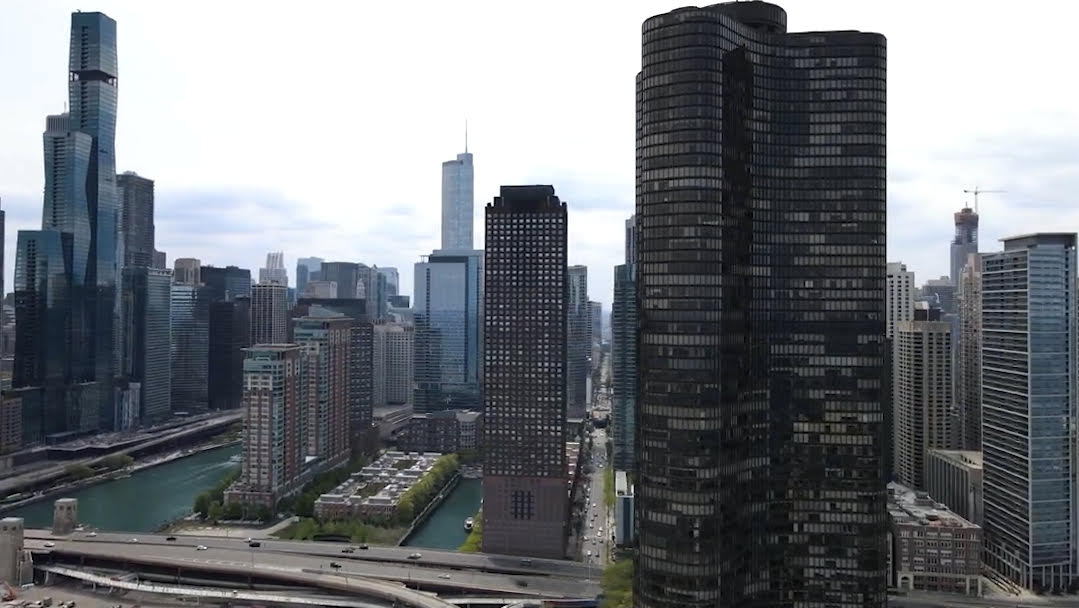
Lake Point Tower is one of Chicago’s most recognizable architectural landmarks — a curved glass tower surrounded by water and light. The unit we restored sits in a space flooded with natural daylight, nearly 360 degrees of windows, white walls, and a minimalist interior palette. In a setting like that, the floor is not just a surface; it becomes part of the architecture.
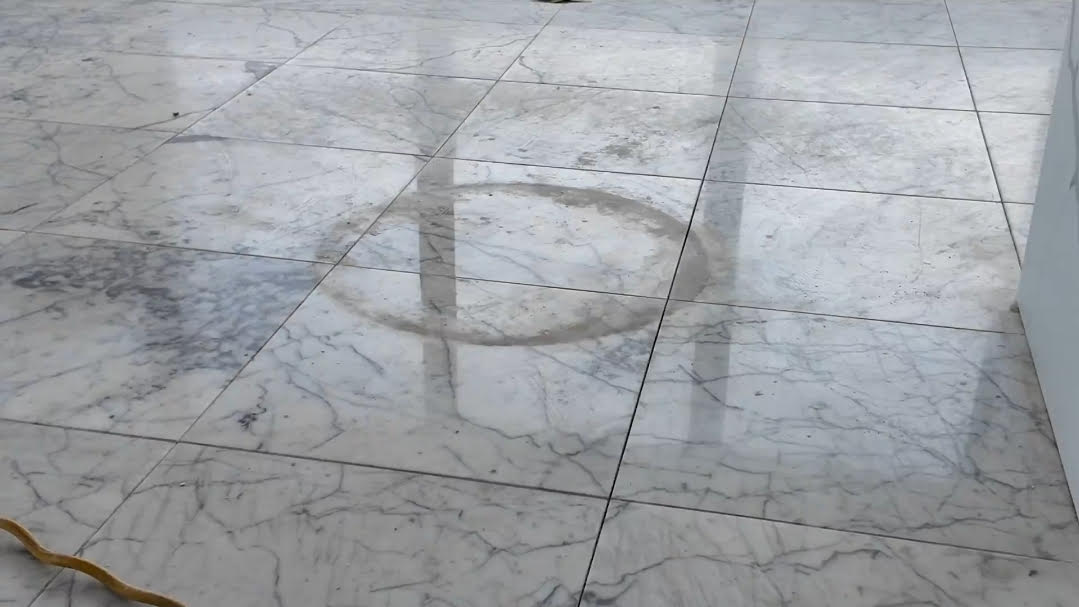
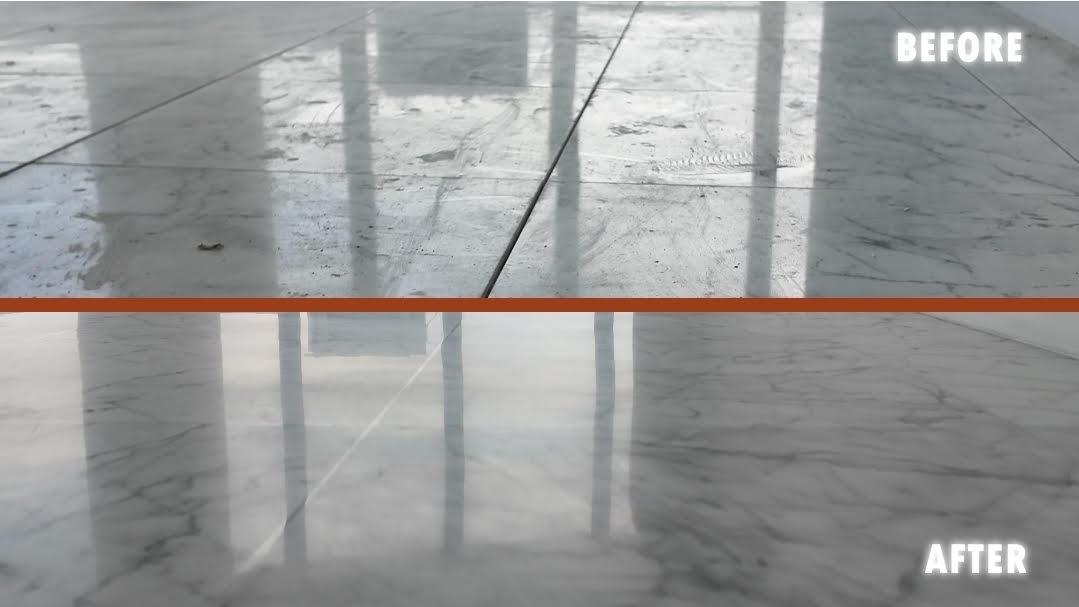
The existing floor was Calacatta marble tile, originally installed as a segmented system with visible grout joints. Years of use left the surface heavily worn: etching, surface scratches, distressed grout lines, and inconsistent reflectivity. The floor had lost its integrity both visually and structurally. Our goal was not simply to polish it; it was to transform it into a unified, monolithic surface.
From Tile to Seamless Stone
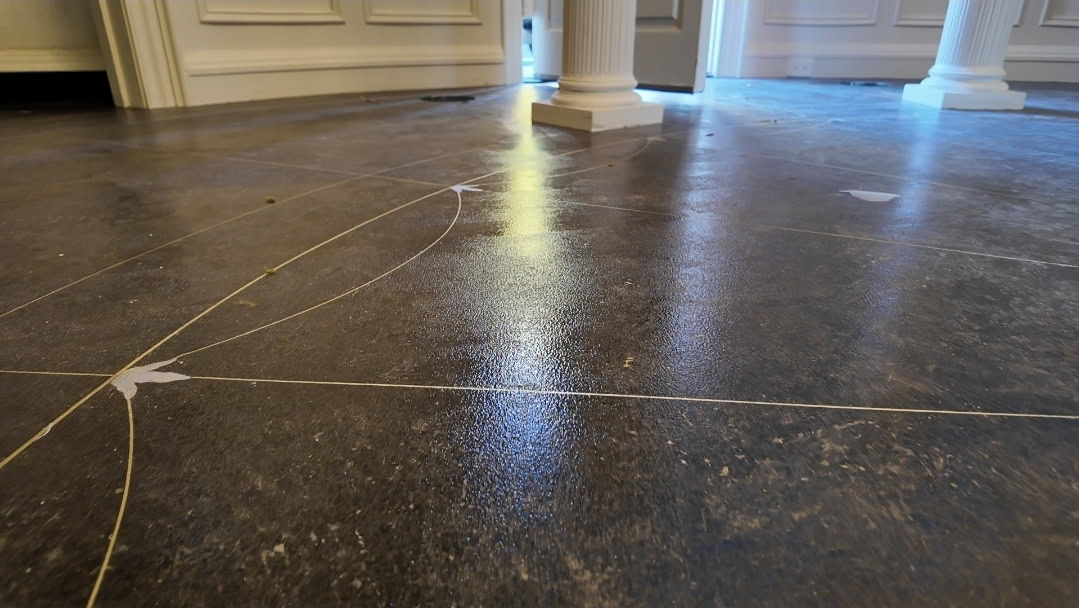
The process began with complete grout removal. We then selected a urethane resin with a translucent quality that visually matched the background of the marble.
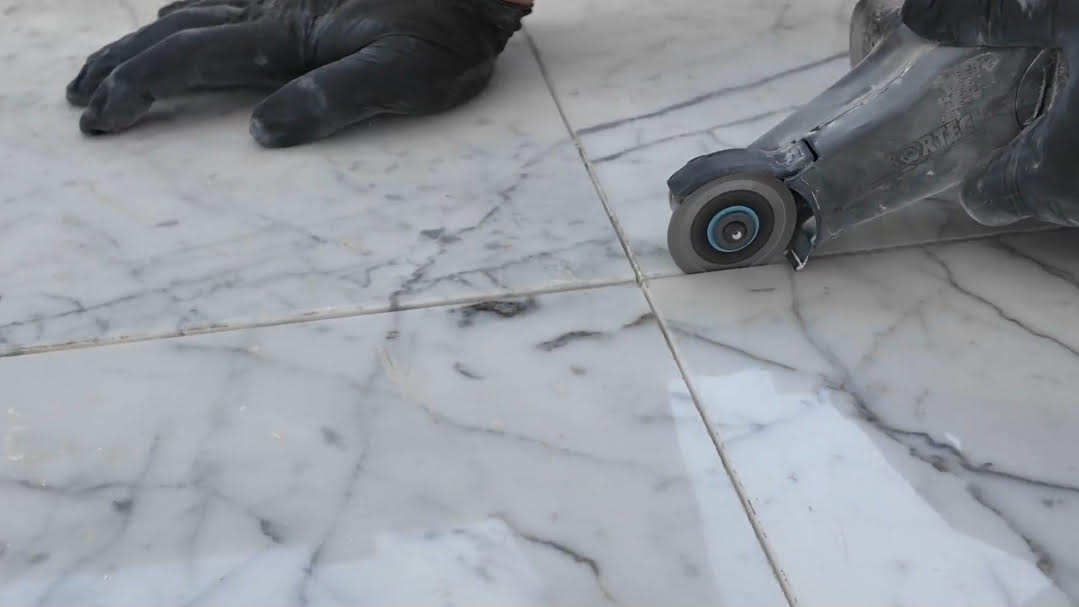
Choosing the correct resin is critical — it must blend with the stone, not compete with it. The intent was to dissolve the visual separation between tiles and create the appearance of continuous stone.
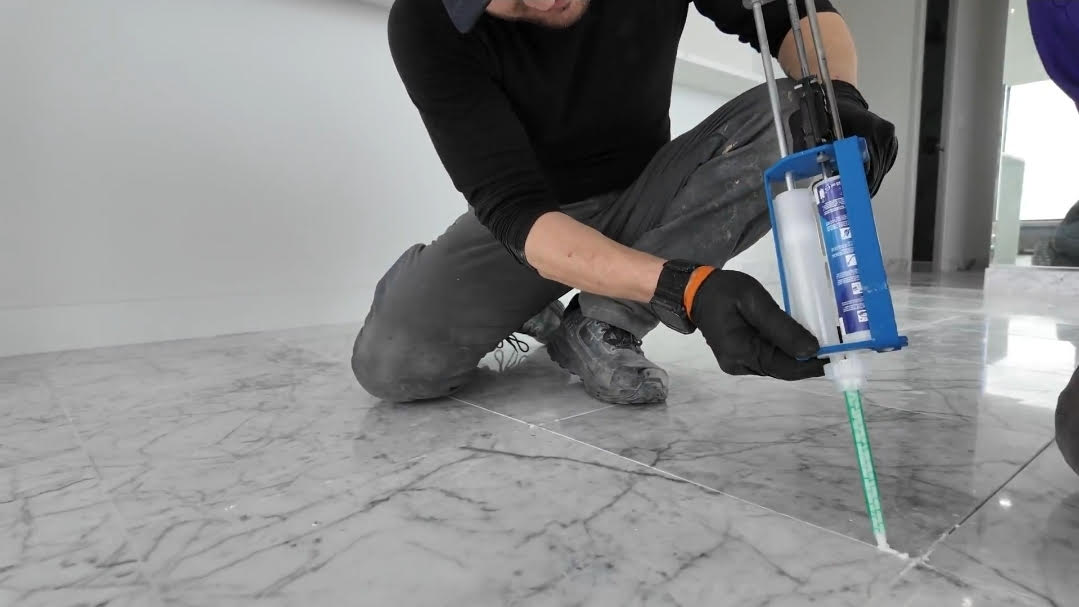
Once the resin was installed, we began the grinding phase. The first metal-bond cut flattened the surface, removed lippage, and brought the tile and resin into the same plane. At that moment, the floor became structurally seamless; rough in texture, but already unified.

From there, we refined the surface step by step:
- Progressive metal grinding to remove deep damage
- Copper bond transition to eliminate previous scratch patterns
- Resin honing to refine the surface into a controlled finish
Each stage is about subtraction and refinement, removing the past damage while preserving the character of the marble.
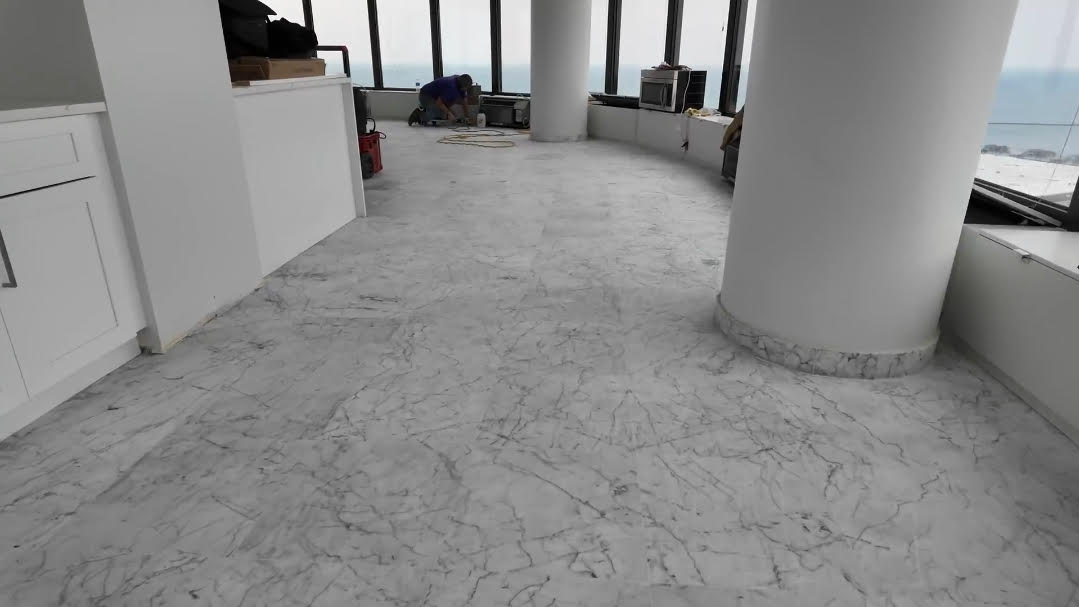
Why Honed Instead of Polished
In a space filled with intense natural light, polishing would have created excessive glare and visual noise. A mirror-like surface in this environment would fight the architecture rather than support it. The decision to finish the floor in a honed state was both aesthetic and functional.
Honed marble performs better over time. It allows deeper sealer penetration, making protection more effective. It hides future wear more gracefully. Instead of degrading, it develops patina — a natural aging process that adds character rather than damage. The floor will mature with the space, not deteriorate within it.
The result is a surface that is soft in reflection, unified in appearance, and built for long-term maintenance. The honed finish complements the light, absorbs it instead of bouncing it, and creates a calm architectural foundation.
The Outcome
The final floor reads as a single slab of marble, seamless, balanced, and intentional. The transformation is not just cosmetic; it is structural, functional, and philosophical. A segmented tile installation was converted into a monolithic stone surface designed to age beautifully and perform under real life.
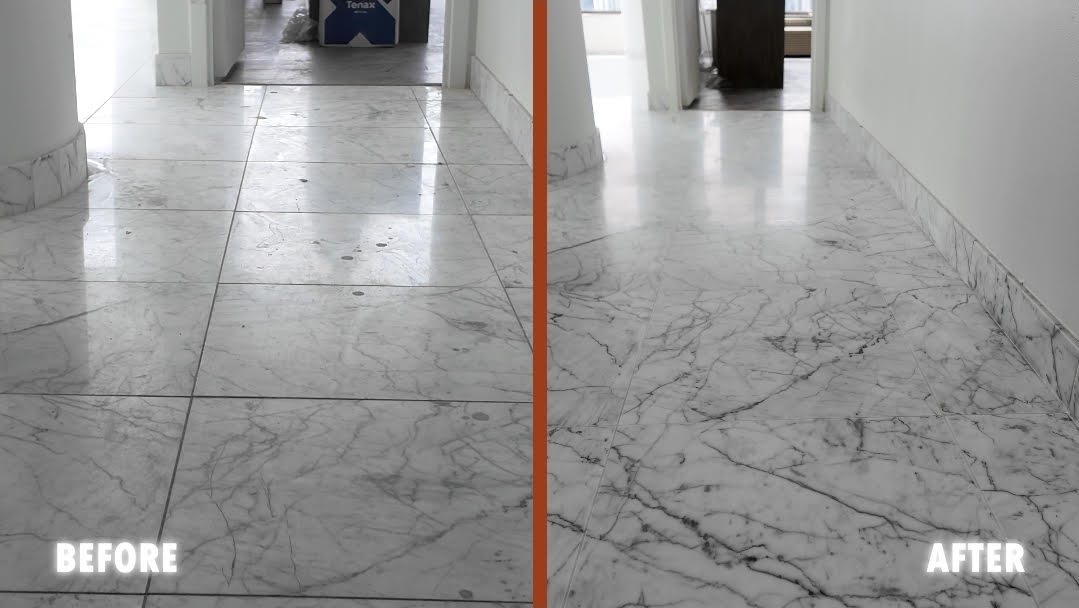
This is the essence of the 8+ Seamless approach: restoration that respects material, architecture, and time.

Watch the full Lake Point Tower restoration video to see the process in action.