Restoring Black Terrazzo the Right Way
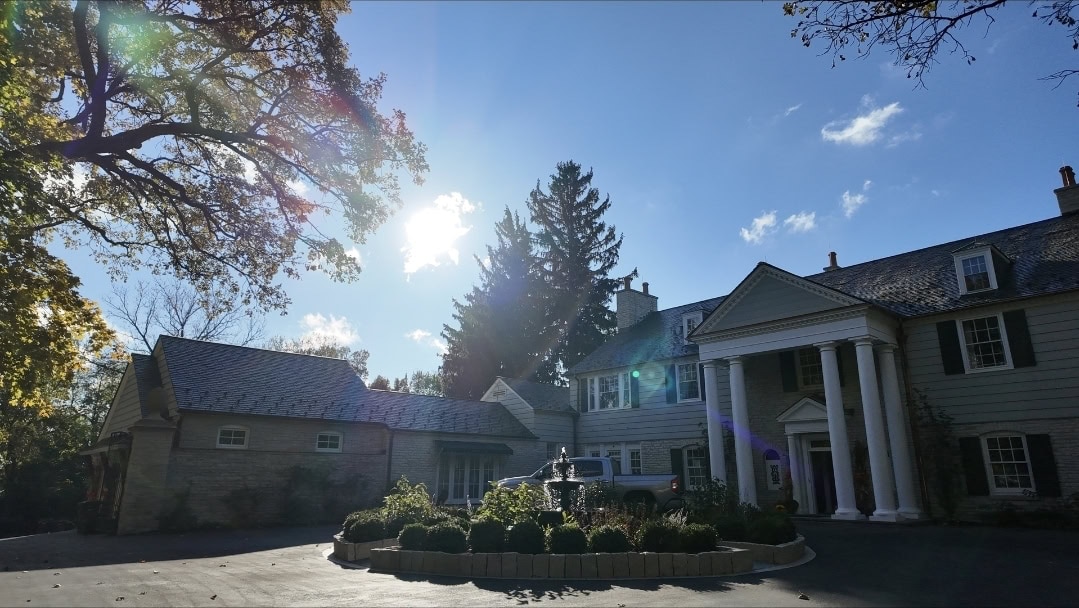
La Belle Vie | Trout Valley, Illinois
Some projects don’t go wrong because the floor is bad.
They go wrong because the material is misunderstood.
This black terrazzo restoration at a grand Trout Valley residence known by its owners as La Belle Vie is a clear example of how fear-driven decisions lead to the wrong solution—and how proper craftsmanship corrects it.
The First Visit: Six Months Earlier
I first evaluated this terrazzo floor approximately six months before the restoration work took place. At that time, the floor was completely bare terrazzo—no coatings, no waxes, no topical systems of any kind.
What I saw was solid, dense, well-installed cementitious terrazzo. It didn’t need protection. It didn’t need to be covered. It needed proper diamond refinement.
We provided a fair, honest price to restore the floor correctly. After that, the project went quiet.
What Changed—and Why It Was the Wrong Decision
When I was later asked to return and take another look, the situation had changed. In the interim, a different contractor had been hired, and the terrazzo had been covered with a urethane coating that included aluminum oxide.
This revealed a fundamental misunderstanding of flooring systems.
In practice:
- Epoxy is commonly used as a base system in garages, warehouses, and industrial settings
- A urethane coating is applied over epoxy as a protective wear layer
- Aluminum oxide is added to the urethane primarily to create slip resistance, not to strengthen the substrate
That system is designed to protect epoxy, not terrazzo.
Applying it to terrazzo was unnecessary and inappropriate.
Why the Coating Never Bonded
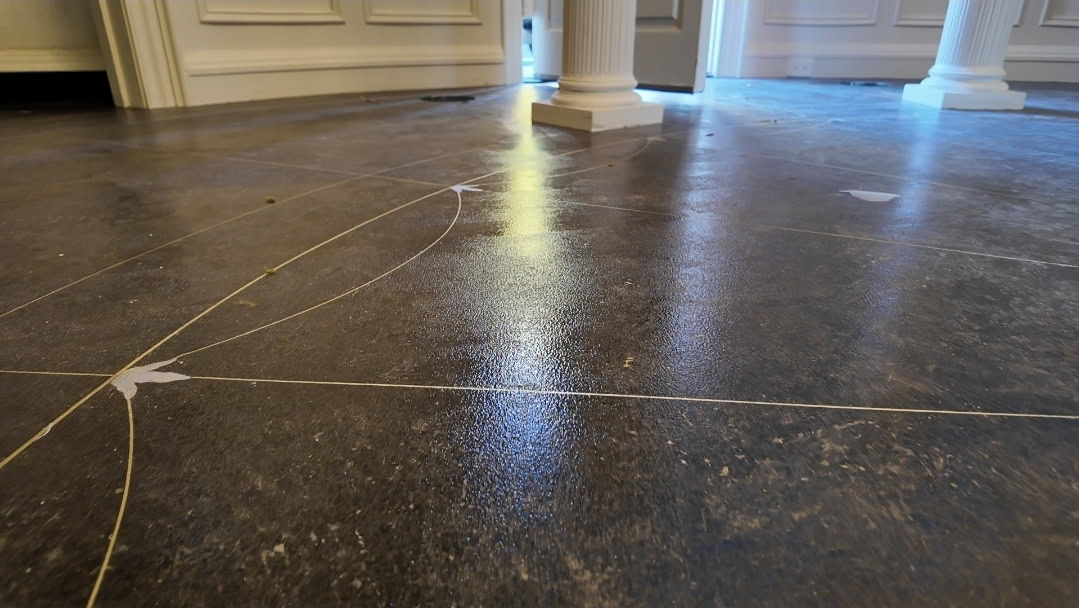
Terrazzo is extremely dense and non-porous. Because of that, the urethane coating never properly penetrated or fused with the surface—it simply sat on top of it.
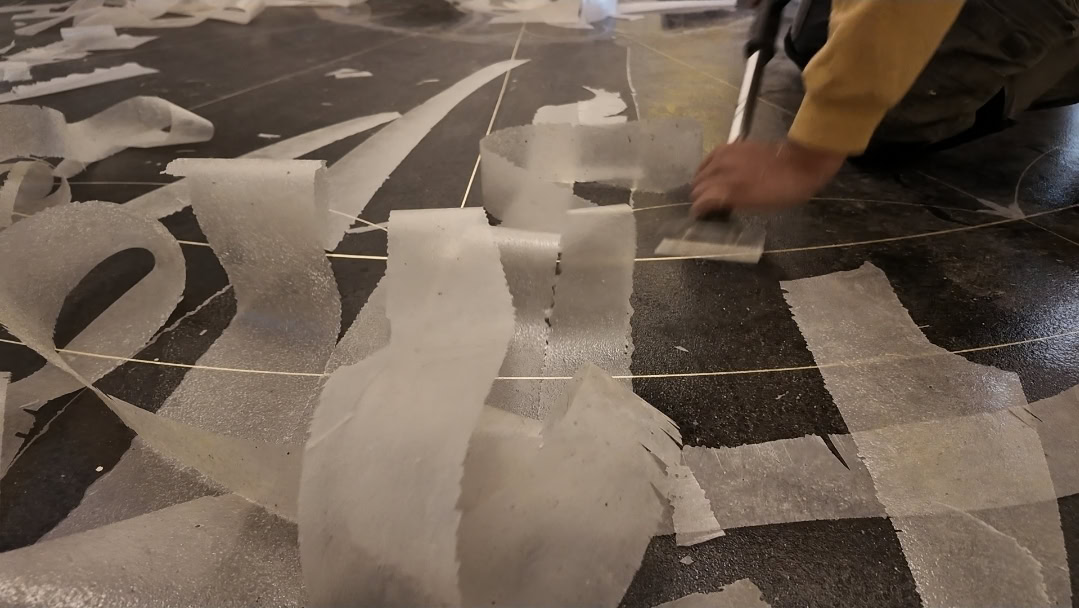
As a result, the coating was very easy to remove, coming off cleanly with scrapers. That ease of removal is not a success—it’s a warning.
Had the coating remained, it would have eventually peeled and delaminated, much like dead skin separating from a healthy surface. Over time, this would have created patchy failure, constant stripping, and long-term damage to the terrazzo itself.
Removing it early prevented that cycle.
A Floor Worthy of the Architecture
From the moment you enter the home, it’s clear this is no ordinary residence. The proportions, symmetry, and materials reflect estate-era craftsmanship.
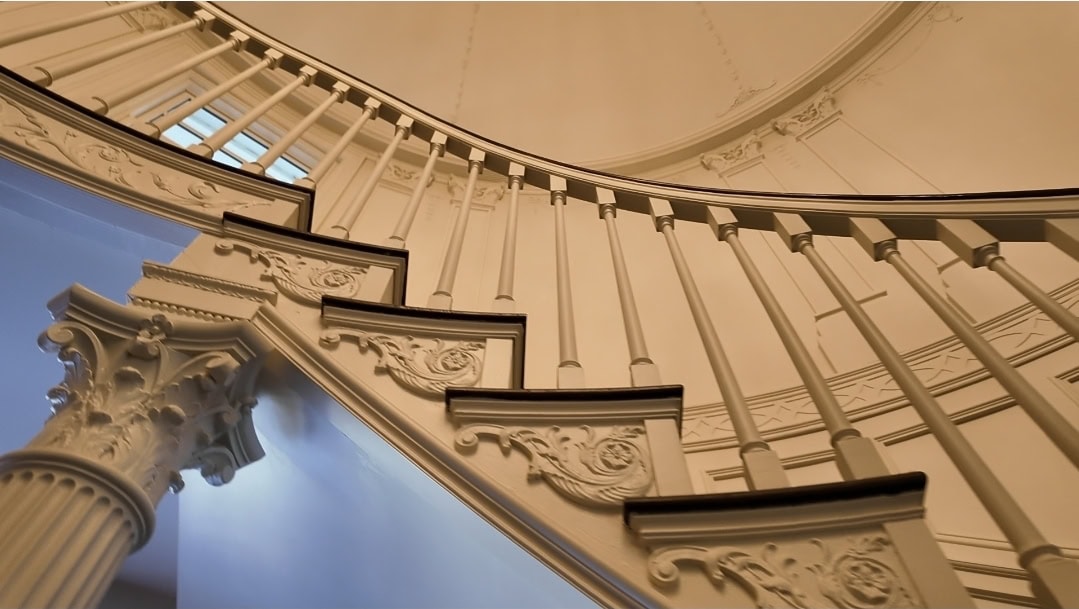
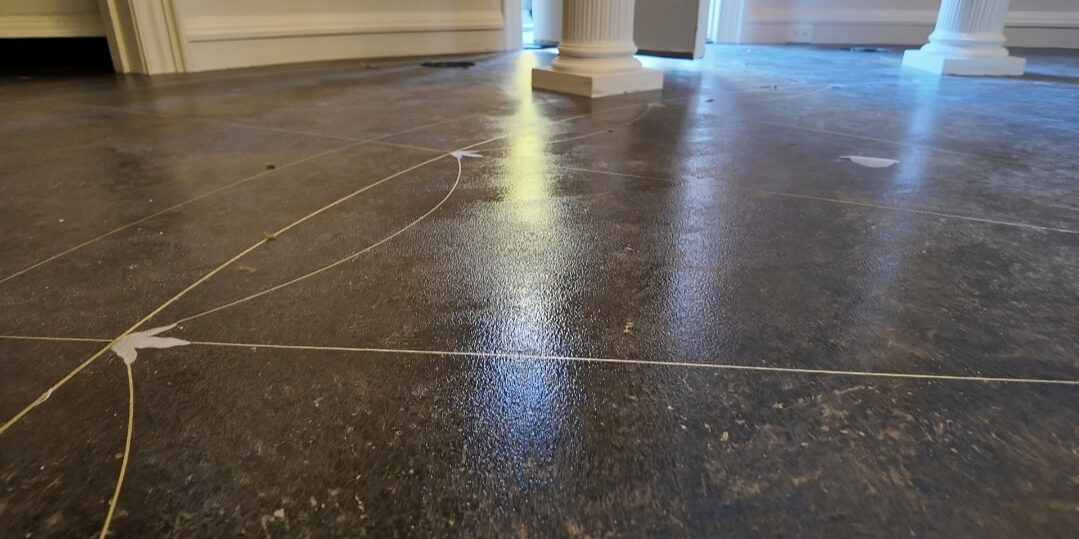
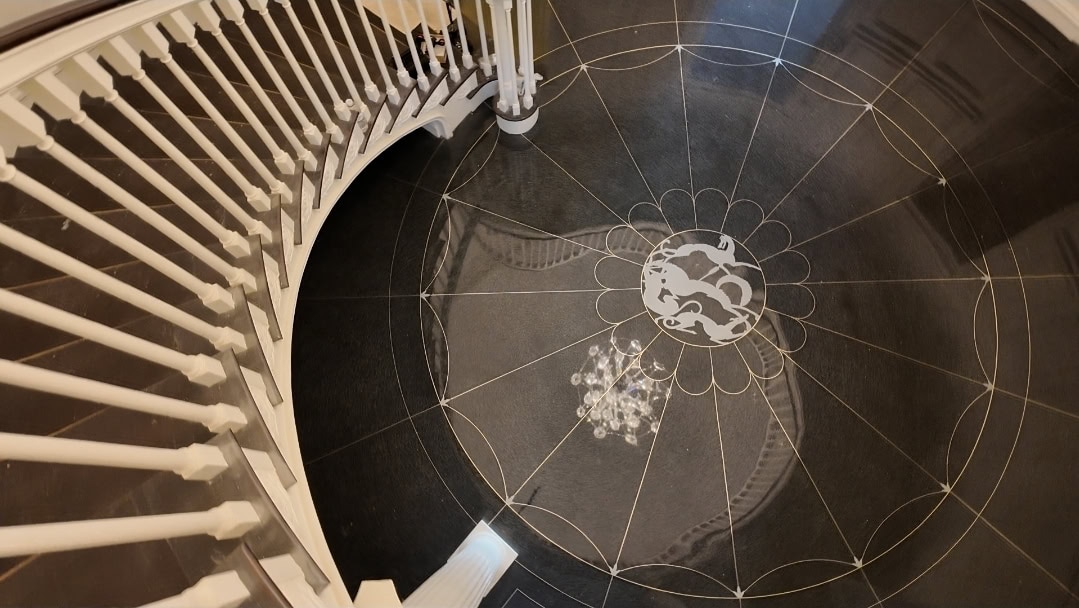
At the heart of the entry is a custom black terrazzo floor with a precise radial layout, metal divider lines, and a hand-crafted central medallion. This is not decorative flooring—it is architectural art.
The medallion features a stylized dragon rendered as a strong, flowing silhouette. While the original designer is undocumented, the artwork reflects early-20th-century architectural design language and appears inspired by artists such as William Hunt Diederich, known for integrating symbolic animal forms into architecture.
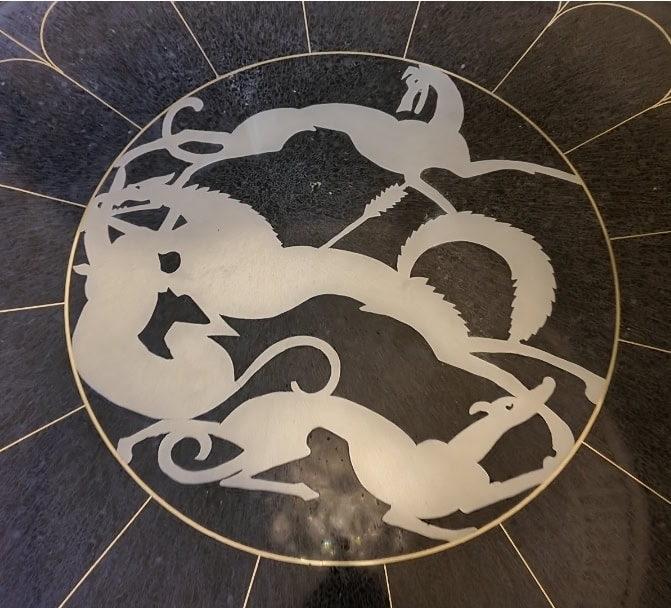
Covering a floor like this doesn’t just change the finish—it obscures the original intent.
The Restoration: Craftsmanship Over Chemistry
Once the urethane coating and aluminum oxide were fully removed, the terrazzo could finally be restored properly.
We performed a complete diamond refinishing process, start to finish, without shortcuts. The floor was refined using high-quality Italian-manufactured diamonds, progressing methodically through metal and copper-bond tooling and continuing all the way to 3500 grit.
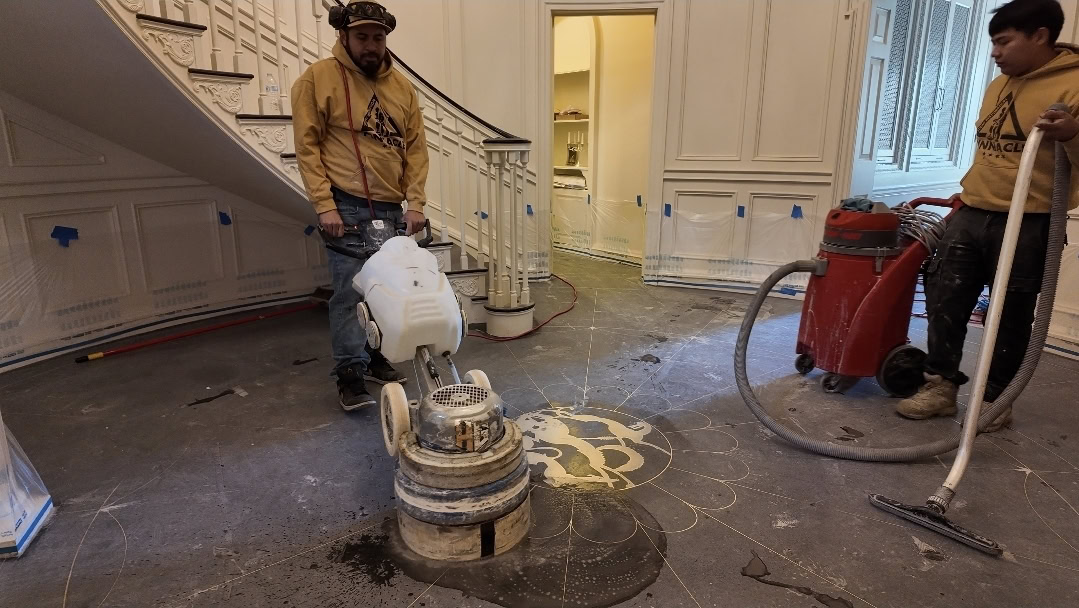
Copper-bound diamonds tightened the terrazzo matrix and built true clarity—not artificial gloss.
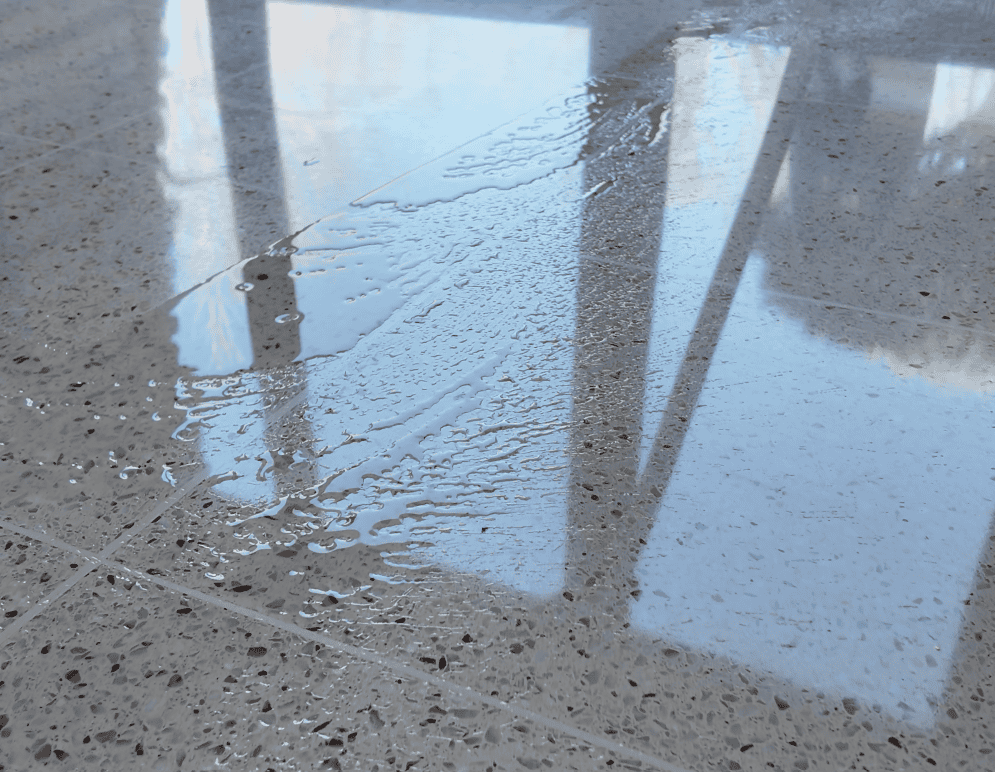
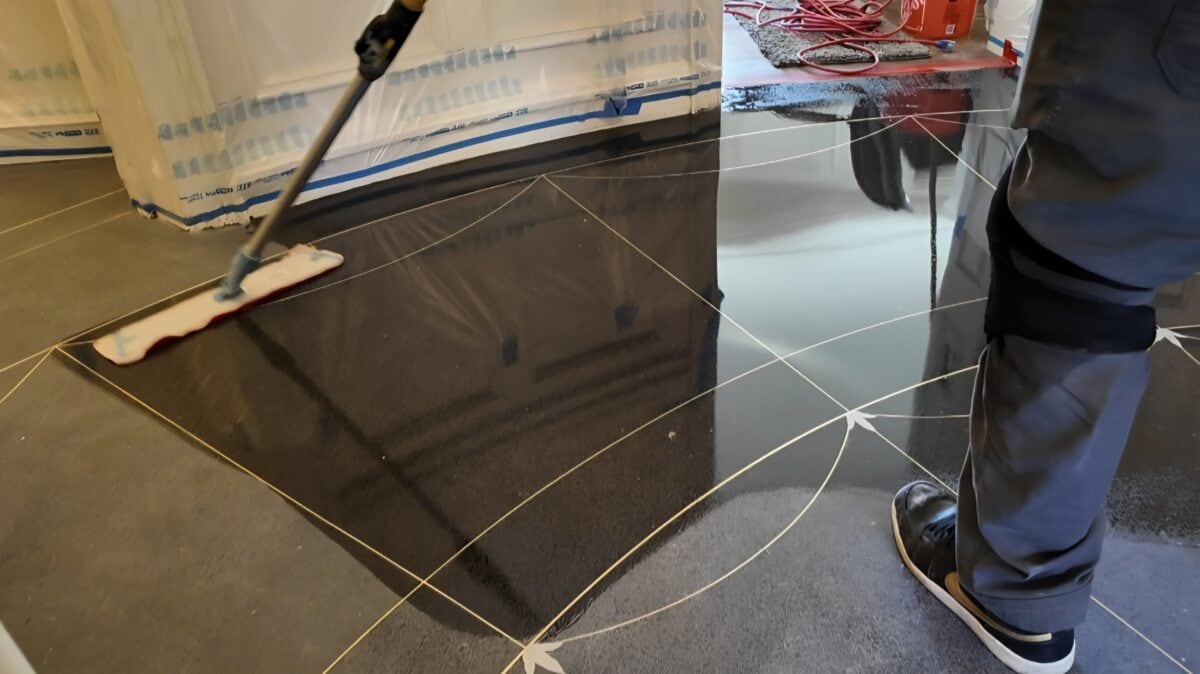
After refinement, we performed a vitrification process, further densifying the surface and enhancing the flow of light. The finish became glass-like, with an extremely sharp distinctness of image. Divider lines, geometry, and artwork became crisp and defined.
To complete the system, the floor was sealed with a penetrating impregnating sealer, increasing density and durability without creating dependency on a topical layer.
When a Floor Becomes Jewelry
The result was not just a restored floor.
It became jewelry for the house.
A centerpiece.
An anchor.
A surface that defines the space.
The shine came from the stone itself.
The durability came from density and refinement.
The beauty came from respecting the material.
Final Thought
This terrazzo floor never needed protection.
It needed understanding.
When fear drives decisions, materials suffer. When knowledge leads the process, terrazzo does what it has done for generations—it responds beautifully.
That is the difference between covering a floor and restoring it.